top of page

Expert Briefings
Search


When the Dots Connect: A systems perspective of casualty evacuation and support for innovation
The Frontline Club, the gathering place for journalists, photographers, and everyone with an interest in international affairs, is built on a commitment to independent journalism, the freedom to report from the world’s most difficult places, and supporting events to encourage a deep dive into ‘frontline issues’. The Club provided the room, and the facilities to ensure that panellists in Kyiv and East Anglia were as present as those in London. The event was much more than a sh
Nicholas Mellor
May 315 min read


Stopping Superbugs Before They Stop Us: A New Approach to Battlefield Infection
Between us, we see both ends of the same problem. One of us tracks resistant organisms through the surveillance data; the other reconstructs the tissue they have destroyed. The picture from both ends is the same: up to 37 per cent of casualties who reach definitive care in Ukraine are carrying infections resistant to every antibiotic available. Some are resistant to drugs that did not exist as a resistance target three years ago. In 2024, we identified carbapenem-resistant gr

Dr. Hailie Uren and Surgeon Solomiia Voitsekhovska
May 194 min read


From Stretcher to Dashboard: The Trauma Patient as a Data Source
Consider what happens in the first hour of a major trauma case. A patient is treated at the scene by para-medics – immediate care is given and vital signs are recorded. This continues in the ambulance or helicopter. A paramedic calls ahead to the hospital. A trauma team assembles to accept the patient, maybe reads a paper handover form, and begins their own assessment from scratch. In that “golden hour”, an extraordinary amount of data could be generated - temperature trajec

Mike Wright
May 13 min read


Eight Years from Observation to Patent: How TTP Came Into Being
I come from investment, not medicine. Twenty years in healthcare finance teaches you to look for the gap between what a problem costs and what it would cost to solve it. When Jeremy Mauger described what he was watching happen to patients on cold, hard scoop stretchers with multiple transfers between trolleys — core temperatures dropping during transfer, clotting systems already failing by the time they reached the resuscitation room — the gap was obvious. The clinical evide

Mary Anne Cordeiro
May 13 min read


Why Trauma Patients Are Still Vulnerable to Hypothermia
In trauma, both physical injury and physiological deterioration can impact mortality. A patient is extracted from a road traffic collision. The injury is potentially survivable. We stop the haemorrhage, secure the airway, ensure respiration and circulation are stable and then consider hypothermia. This is all in line with the MARCH protocols for trauma. By the time that patient reaches the resuscitation room, their core temperature is dangerously below 35 ℃, that is below the
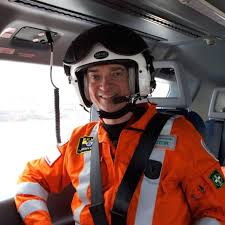
Dr Jeremy Mauger
Apr 303 min read
bottom of page