
Why Trauma Patients Are Still Vulnerable to Hypothermia
In trauma, both physical injury and physiological deterioration can impact mortality.

A patient is extracted from a road traffic collision. The injury is potentially survivable. We stop the haemorrhage, secure the airway, ensure respiration and circulation are stable and then consider hypothermia. This is all in line with the MARCH protocols for trauma.
By the time that patient reaches the resuscitation room, their core temperature is dangerously below 35 ℃, that is below the threshold at which the body’s clotting system begins to fail. Whilst it is routine to take tympanic temperature at the roadside, there is not continuous monitoring of temperature unless the patient is intubated in which case core temperature is monitored by an oesophageal probe. This is not because it doesn’t matter for most patients, but because the mental model of trauma care is organised around the injury rather than the physiological state of the patient.
The Lethal Triad
Three processes converge in major trauma:
hypothermia (core temperature below 35°C)
coagulopathy (disrupted clotting), and
acidosis (dangerous blood acidity from poor tissue perfusion).
Each worsens the other two. Hypothermia directly impairs platelet function which impacts the ability of the blood to coagulate — not because the injury has changed, but because the patient’s physiology is failing. Acidosis compounds this further. The cascade, once it has momentum, is far harder to interrupt than to prevent.
The scale: Hypothermia on hospital arrival affects 30–50% of major trauma patients in temperate climates. A core temperature below 32°C on admission has been associated with mortality exceeding 50%.
Why Cold Goes Undetected
Gold-standard core temperature measurement is only routine when a patient is intubated. Otherwise, the standard for temperature measurement in critical care is tympanic which gives an indication of trend but not actual core temperature. The result is a culture of estimation — tympanic readings, clinical judgment based on appearance— and both may be unreliable.
Clinical judgment systematically underestimates hypothermia because the visible signs diminish as temperature falls. A severely hypothermic patient may appear calm and cooperative while their coagulation is already failing. The monitoring gap exists in spite of every effort to re-visit this problem and find a solution.
The Cold Surface Problem
Modern scoop stretchers are made from hard polyethylene and composite materials — durable, lightweight, and highly effective at what they were designed to do. They are also cold. A trauma patient is already becoming colder from the moment of impact particularly if they are haemorrhaging blood and this trend is exacerbated by being placed on a cold stretcher. This is further compounded by clothing cut for assessment, intravenous fluids being administered at ambient temperature, and repeated exposure during examination. Each is clinically necessary. Each accelerates heat loss.
A typical major trauma journey involves four or five manual transfers between surfaces: scene of accident, ambulance, emergency department trolley, CT scanner, final hospital bed. Every transfer breaks the possibility of being able to stabilise the patient’s body temperature during their journey.
How do we improve this situation for our patients? The UK air ambulance network operates through 21 independent charities, each procuring its own equipment. Whilst the Royal College of Surgeons have published guidance on the importance of temperature stabilisation in their patient handling document, the clinical need has been underestimated. The emergency market is ripe for innovation of a new device that fills the gap.
What Frontline Observation Can Change
The collaboration that became ThermoTraumaPort began with a direct clinical need: hypothermia in trauma is a significant issue so we need tools to start warming our patients at the earliest opportunity.
TTP keeps a patient on a single, active warming, pressure-distributing system from the site of injury through to their final hospital bed — no exchanges back to cold surfaces, active temperature maintenance throughout.
It inverted the standard manufacturer-led model: the clinical insight came first, the specification followed. EAAA has since built its RAID research group to improve patient care throughout all their patient groups. The TTP is a strong case study as evidence for why RAID’s work is critically important.
The most important innovation in TTP's development was not technical. It was organisational: a pre-hospital service that listened to its own clinicians, and a manufacturer willing to follow where the evidence led.
To learn more, join us at Frontline Innovation: Medical Evacuation — 26 May 2026, Frontline Club, London.
The team behind ThermoTraumaPort will be discussing what it took to bring this device from clinical insight to manufacturable product — and what comes next.
About the Authors
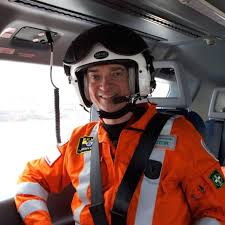
Dr Jeremy Mauger is a Consultant Anaesthetist and Pre-Hospital Emergency Medicine physician with over twenty years in critical care and intensive care. He works with East Anglian Air Ambulance and the Suffolk Accident Rescue Service.
Mary Anne Cordeiro is Founder and CEO of ThermoTraumaPort. She has led TTP's clinical and commercial development over eight years. The device is patented in the US and Europe and is preparing for deployment with US military customers.

Comments